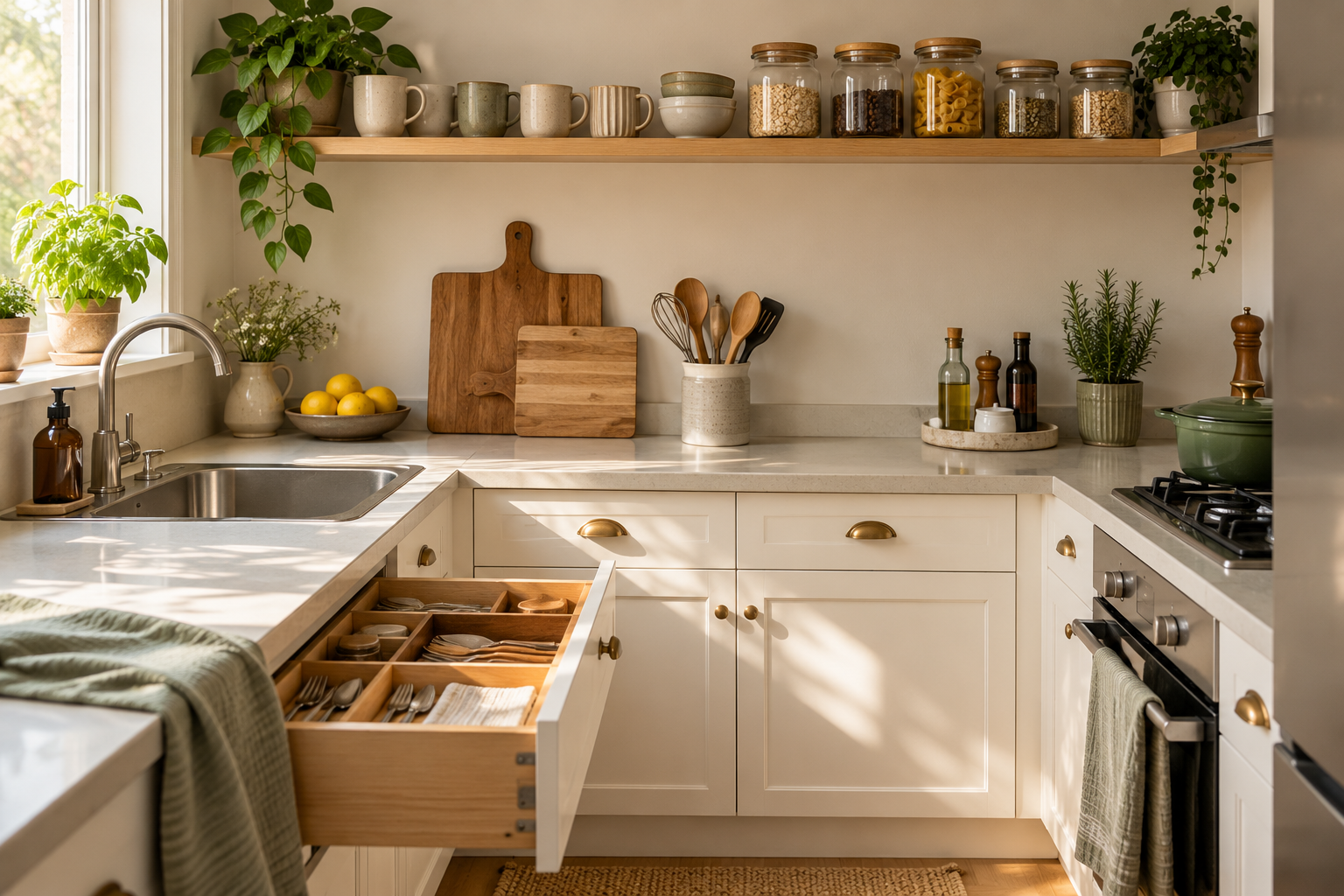
A small rental kitchen often has to handle cooking, food storage, washing up, and the overflow from other rooms. The most useful storage ideas make those jobs easier without blocking your worktop or requiring permanent changes.
Before buying an organizer, empty one cupboard and measure its usable width, depth, and height. Check hinges and pipes as well as the shelf itself. Then choose the idea that solves a specific problem.
1. Create a daily-use cooking zone
Group your most-used spatula, spoon, knife, and chopping board near the preparation area. Put less-used tools elsewhere. If a utensil pot takes up too much worktop space, use a divided drawer instead. The best location is the one you can reach while cooking without crossing the kitchen repeatedly.
2. Use a shelf riser where height is wasted
A shelf riser can create a second level for cups or plates in a tall cupboard. Measure before choosing one and check its load limit. Keep the arrangement stable and leave enough clearance to remove items easily. A riser is not helpful if every mug requires moving a pile of dishes.
3. Collect small packets in a shallow tray
Soup sachets, spice packets, and small bags can get lost behind larger packages. Put one category in a shallow tray that slides out. Reuse a clean box to test the idea first. Keep labels visible and bring older items toward the front.
4. Store baking trays upright
When a cupboard is tall enough, a suitable divider can hold boards and baking trays vertically. This lets you remove one item without lifting a heavy stack. Check the divider’s stability and avoid placing sharp or awkward items where they can fall when the door opens.
5. Give food-container lids one home
Match containers with their lids and let go of unusable pieces. Nest compatible containers and keep lids upright in a small box or divider. Keep only the number your routine needs. A cabinet full of unmatched plastic is often a quantity problem before it is an organizer problem.
6. Use a cupboard door only when it closes freely
An over-door organizer may suit lightweight items if it fits the door thickness and does not interfere with hinges or shelves. Test the door slowly before filling it. Check the lease before attaching anything, and follow product instructions. Adhesive hooks can damage some finishes even when described as removable.
7. Separate backups from everyday supplies
Keep the open bottle of dish soap accessible and spare supplies together in a limited backup zone. Before shopping, check that zone. Set a quantity limit that fits your space so a discounted multipack does not displace things you need daily.
8. Consider a narrow trolley after measuring your routes
A freestanding trolley may add flexible storage, but its width is only part of the decision. Allow for handles, wheels, open appliance doors, and the route through the kitchen. Avoid positioning it near heat, exits, or ventilation. Check load limits and stability, especially in homes with children or pets.
9. Keep a small part of the worktop deliberately empty
Open preparation space is useful storage planning. Move occasional-use appliances off the counter when there is a suitable, accessible place for them. Do not hide an appliance so awkwardly that lifting it becomes unsafe. Keep one ready-to-use work zone rather than distributing belongings across every surface.
A no-spend cupboard reset
- Choose one cupboard and take a photo for your own reference.
- Remove its contents and wipe the shelf.
- Separate daily-use items from occasional-use items.
- Remove expired food according to its labeling and local disposal guidance.
- Group the remaining contents in existing boxes or trays.
- Try the arrangement for a week before buying anything.
Store cleaning products separately from food, in their original labeled containers. Follow food-storage guidance on packaging rather than relying on the look of a container.
Frequently asked questions
How can I add kitchen storage without drilling?
Start with internal cupboard dividers, freestanding shelving, or a properly fitted over-door organizer. Check fit, load limits, and rental restrictions. No drilling does not always mean no damage.
Should I put all dry food in matching jars?
Only if it helps your routine and fits your shelves. Keep expiry, allergen, and cooking information accessible. Original packaging in a grouped tray is often simpler and costs nothing.
What should I buy first?
Buy nothing until you have measured and tested your biggest problem. If a specific issue remains, choose one organizer that solves it. Try that before expanding the system.
For the bigger picture, read our room-by-room small-apartment organization plan.


Leave a Reply