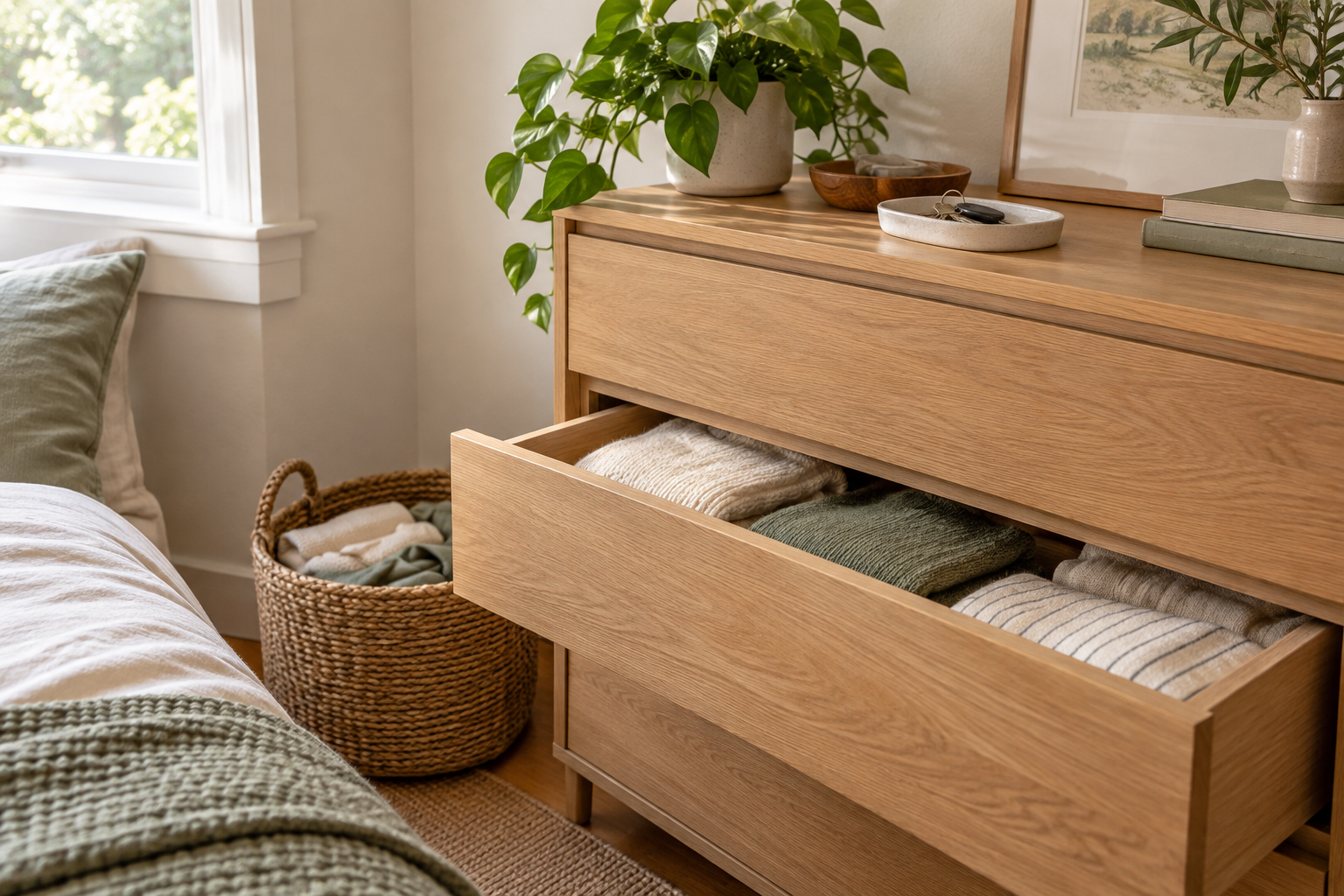
When you live in a small home, decluttering can feel risky: empty one cupboard and the entire room becomes a sorting area. A short daily session keeps the project small enough to finish. The goal is a space that works better, not a fixed number of possessions.
Choose a finishable zone
Start with one drawer, one shelf, or the items on one bedside table. Avoid pulling out an entire wardrobe unless you have the time and space to put it back. Name the benefit you want: finding socks quickly, preparing food on a clear worktop, or sitting down without moving laundry.
The 15-minute method
Minutes 1–2: prepare
Set a timer and gather a small bag for rubbish, a container for donations, and a tray for things that belong elsewhere. Choose a zone and decide where the sorted items will go. If you have limited energy, shorten the session and choose a smaller zone.
Minutes 3–10: sort a small batch
Handle one item at a time. Ask whether you use it, whether it works, whether it is yours to decide about, and whether it has an appropriate home. Keep useful things without guilt. A practical spare may be reasonable; a pile of broken duplicates may simply delay disposal.
Do not discard another person’s belongings without agreement. Put shared or uncertain items in a separate discussion category and continue with the things you can decide about.
Minutes 11–13: return what belongs
Put the keep items where you use them. Group similar things so the next cleanup requires fewer decisions. Leave enough space to take an item out and put it back. Storage that only works when packed perfectly is hard to maintain.
Minutes 14–15: close the session
Take rubbish to the appropriate bin and return relocated items. Put donations in a designated place and set a realistic date to take them away. Finish by clearing the working surface. Do not start a second drawer just because there are two minutes left.
What to do with “maybe” items
For nonessential items you are unsure about, use a small, labeled decision box and choose a review date that suits the item. Put a clear limit on its size. At the review, consider what you used, needed, or missed.
Do not use an arbitrary deadline to discard legal documents, medicines, important records, sentimental items, or belongings someone else owns. Those categories need more careful decisions and may belong in a separate project.
A seven-session starter plan
- Session 1: The landing spot for keys and mail.
- Session 2: One cutlery or utensil drawer.
- Session 3: One shelf of mugs or food containers.
- Session 4: The bedside table.
- Session 5: One small category of clothing.
- Session 6: A bathroom shelf of your own toiletries.
- Session 7: Review the zones and complete a donation trip or arrange one.
Repeat a session when necessary. The plan is a sequence of manageable tasks, not a test you must pass in a week.
Prevent clutter from returning
Give incoming items a pause point. Before buying, ask where the item will live and what daily problem it solves. When a category reaches its storage limit, review it before adding another container.
Keep a donation bag in a convenient place if that works for your household. Empty it regularly. Once a week, reset the small zones you have already improved. If something keeps landing in the wrong place, consider moving its home closer to where you naturally use it.
Three common mistakes
Buying storage before sorting
New bins can preserve a pile you do not need. Sort first, measure second, and shop only when a specific problem remains.
Making every decision at once
Sentimental boxes and paperwork may take much longer than a kitchen drawer. Choose an easier category first and reserve complicated decisions for a session with enough time and support.
Leaving the exit pile indefinitely
A donation bag still occupies space. Identify a suitable destination, check what it accepts, and choose a realistic drop-off date. Avoid donating broken or unusable items just to avoid disposing of them yourself.
Frequently asked questions
Can 15 minutes really make a difference?
It can improve a small zone when you choose a task you can finish. Larger areas need repeated sessions. Judge progress by easier everyday use rather than the number of bags removed.
What if I miss a day?
Resume with the next manageable session. There is no need to double the workload. A routine you can restart is more useful than one that only works during a perfect week.
Where should I begin when everything feels cluttered?
Choose a small space you use every day and can control yourself. Clear a bedside surface or organize the place where you put your keys. Leave complex shared categories until you can discuss them.
When you are ready to organize the space you have cleared, use our room-by-room apartment plan.


Leave a Reply