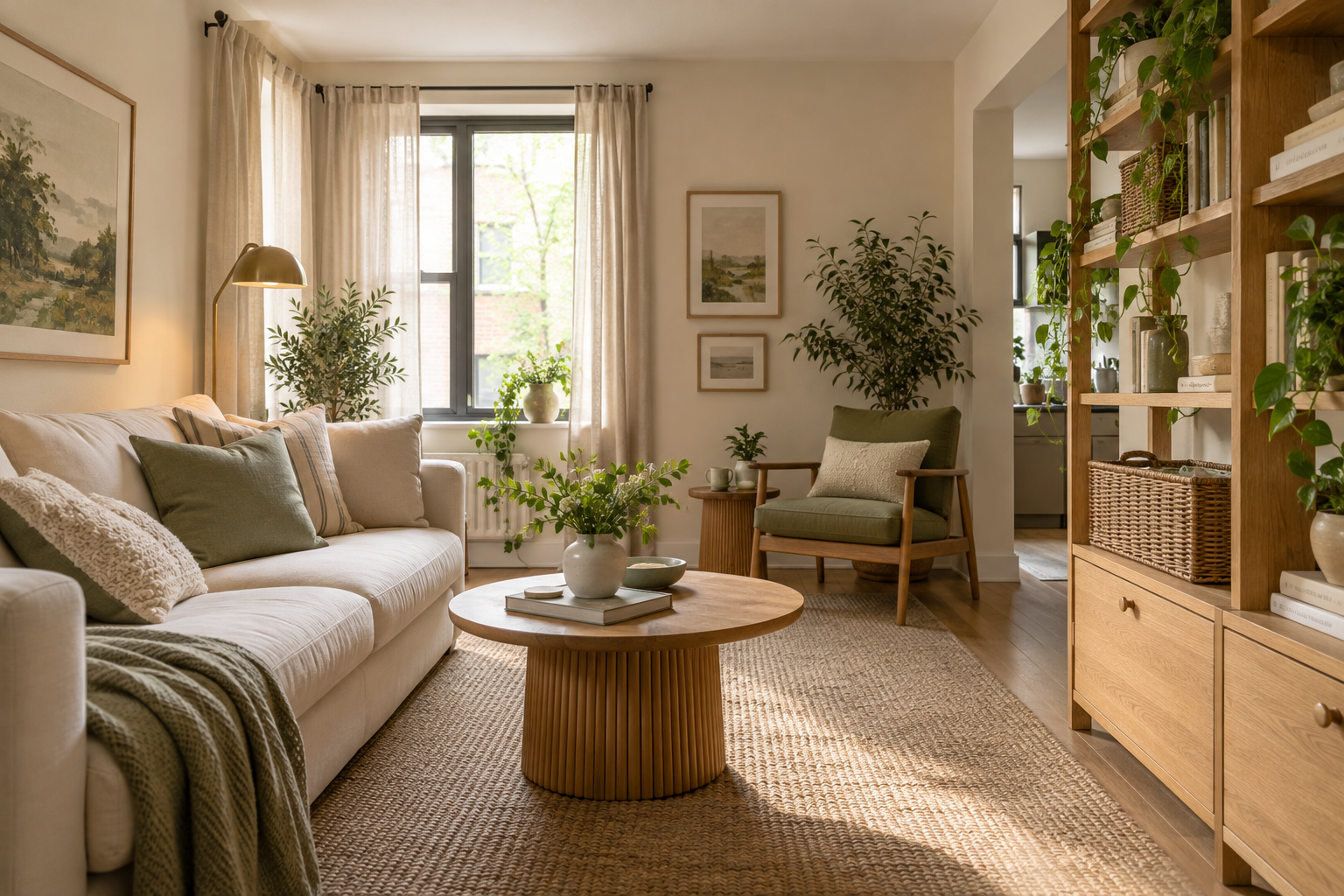
A small apartment becomes easier to live in when the things you use have clear homes and the routes through each room stay open. You do not need matching baskets or a weekend renovation to begin. Start with one daily frustration, reduce what is in that area, and build a storage system around the items you actually keep.
This room-by-room plan helps you organize a small apartment without buying furniture first. Work through one zone at a time, using containers and shelves you already own wherever possible.
Start with a 20-minute space audit
Walk through your apartment and write down three moments that feel harder than they should: finding your keys, preparing dinner, putting away laundry, or clearing the sofa. Choose the problem that happens most often. That becomes your first project.
Measure the usable space before considering an organizer. Record width, depth, and height, including room for doors and drawers to open. Leave access to outlets, vents, heaters, and walkways. A container that fits on a shelf but prevents a cupboard from closing is not a useful fit.
Declutter one category before adding storage
Take out a manageable category, such as mugs or everyday shoes. Sort it into keep, relocate, donate, and discard. Keep the quantity that suits your real routine and available space. If you wash dishes daily, your needs may differ from a household that hosts guests every weekend.
Return the keep items first. Move donations out of the working area and choose a date to take them away. Do not buy containers until you know the volume you need to store. An empty shoebox can test a grouping before you spend money on a permanent bin.
Entryway: give everyday essentials one landing spot
Choose a small tray for keys, a place for your bag, and a limited shoe zone. If there is no hallway, the inside of an existing cupboard can serve as your entry station. Keep only frequently worn shoes near the door; move occasional pairs to a bedroom shelf.
In a rental, check your lease and the manufacturer’s instructions before attaching hooks. Adhesive products do not work on every finish and may damage paint. A freestanding rack or over-door organizer may be a better option, provided the door closes freely.
Kitchen: organize around the way you cook
Put preparation tools near your work surface, cookware near the stove without exposing it to heat, and dishes near the place you unload or dry them. Keep frequently used items within comfortable reach. Reserve harder-to-reach shelves for lightweight items you rarely use.
Store food by category and bring older packages toward the front. Use a shallow tray for small packets so they do not disappear behind larger boxes. Label opened food with relevant dates and follow the packaging’s storage guidance. You do not need to decant everything: original packaging often provides useful cooking and expiry information.
If a cabinet has unused height, measure it for a shelf riser. Check that stacked items remain stable and easy to retrieve. Avoid solving one storage problem by creating a precarious stack that needs dismantling every time you cook.
Living room: protect the space you use to relax
Choose a home for remotes, chargers, books, and other items that collect on the coffee table. A small basket can hold current-use items, but give it a capacity limit. When it is full, put things away rather than adding another basket.
If you already own a storage ottoman, use it for lightweight blankets or games. Before buying multifunctional furniture, compare its closed and open dimensions with your walking routes. Storage is only helpful when you can access it without rearranging the room.
Bedroom and closet: make putting things away easy
Group clothing by how you get dressed: work clothes together, workout clothes together, and sleepwear together. Use vertical folding where it helps you see items in a drawer. For fabrics that wrinkle easily, hanging may be more practical.
Keep an accessible laundry basket and a specific place for clothes that have been worn but are not ready for washing. A single hook or small section of a rail prevents that in-between category from taking over a chair.
Under-bed storage can work for spare bedding or seasonal clothes. Measure the clearance and check that containers can slide out without blocking the room. Store items clean and dry, and choose a method appropriate to your home’s moisture conditions.
Bathroom: reduce duplicates and separate daily supplies
Keep daily toiletries together and put unopened backups in a separate, limited area. Check labels for storage requirements and disposal guidance. Avoid keeping medicines in a damp bathroom when their instructions call for a cool, dry place.
Use washable trays to make shelves easier to clean. Store cleaning products in their original labeled containers and keep them out of reach of children and pets. Never mix products or transfer them into food containers.
Use vertical space carefully
Tall shelving can free floor area, but stability matters. Follow furniture anchoring and load-limit instructions and obtain permission for wall fixings where necessary. Keep heavier objects low and frequently used items at a comfortable height. Never block an exit to gain storage.
A simple seven-day organization plan
- Day 1: Audit your apartment and choose one recurring problem.
- Day 2: Declutter one small category in that zone.
- Day 3: Set up an entryway landing spot.
- Day 4: Rearrange one kitchen cupboard around daily use.
- Day 5: Clear a living-room surface and assign homes to its contents.
- Day 6: Improve the laundry or clothing routine.
- Day 7: Review what stayed tidy and adjust what was awkward.
Limit each session to what you can finish and put away. A completed drawer is more useful than an entire apartment emptied onto the floor.
Keep the system working with a five-minute reset
Each evening, return items to their homes, clear the main work surface, and prepare the essentials for tomorrow. Once a week, empty your landing tray and check the donation bag. When a zone repeatedly overflows, reduce its contents or move the storage closer to the point of use.
Frequently asked questions
How do I organize a small apartment with no storage?
Begin by reducing duplicates and grouping items inside furniture you already own. Try the inside of a wardrobe, the space under a bed, or a shelf divided into smaller zones. Add furniture only after measuring and identifying a specific need.
What should I organize first?
Start with the area that interrupts your day most often. For many households, that is the entryway, kitchen worktop, or laundry zone. Fixing a daily friction point gives you an immediate reason to maintain the system.
How can I organize without spending money?
Reuse clean boxes, move an existing shelf, and remove items that no longer serve your routine. Test those changes for a week before buying anything. The goal is easier access and simpler cleanup, not a matching set of organizers.
Your next step: Pick one surface today. Remove everything, return only what belongs there, and assign a home to the rest. Leave enough open space to use it comfortably.


Leave a Reply